
This marks a major milestone in efforts to mobilize both public and private funding for forest protection.
Costa Rica has become the first country in the world to access climate finance through the LEAF Coalition, marking a major milestone in efforts to mobilise both public and private funding for forest protection at scale.
This achievement was made possible by the issuance of high-integrity forest carbon credits under the ART TREES standard, recognizing Costa Rica’s verified results in reducing emissions and conserving forests between 2017 and 2019. More than one million tonnes of CO₂ equivalent (tCO₂e) of net carbon removals have been verified, reflecting the country’s continued leadership in climate action and nature protection.
With companies stepping in—including Bayer—and with a significant volume expected to be taken up by private buyers, the transaction demonstrates the growing potential to channel significant private finance towards high-integrity forest conservation.
Mónica Navarro del Valle, Minister of Environment and Energy of Costa Rica, said:
‘This is a proud moment for Costa Rica. Becoming the first country to receive climate finance through the LEAF Coalition is a testament to our long-standing commitment to forest conservation and sustainable development. This finance will directly benefit the communities and Indigenous Peoples who have been the custodians of our forests for generations, and it validates the approach we have taken to build transparent, inclusive mechanisms for protecting our natural heritage.’
Norway, through its International Climate and Forest Initiative (NICFI), is one of the partners in the LEAF Coalition supporting the transaction. Minister of Climate and Environment Andreas Bjelland Eriksen said:
‘Costa Rica is showing what is possible. Through sustained leadership in forest conservation, the country has delivered results that are now unlocking international public and private finance through the LEAF Coalition. This will directly support Costa Rica’s impressive Payment for Ecosystem Services programme, benefiting farmers, landowners, Indigenous Peoples and local communities.’
…
Norway’s support to the LEAF Coalition goes through Emergent’s Purchase Guarantee Facility (PGF), which is designed to stimulate private sector demand for high-integrity forest carbon credits. The facility does this by guaranteeing a minimum price for forest credits. Through this price signal, companies are encouraged to enter the market and compete for supply—ultimately bidding above the floor price and helping to crowd in private finance over time. Norway has provided a purchase guarantee for 1 million credits at USD 10 per ton to Costa Rica through the Purchase Guarantee Facility.
Rewarding long-term commitment to forests
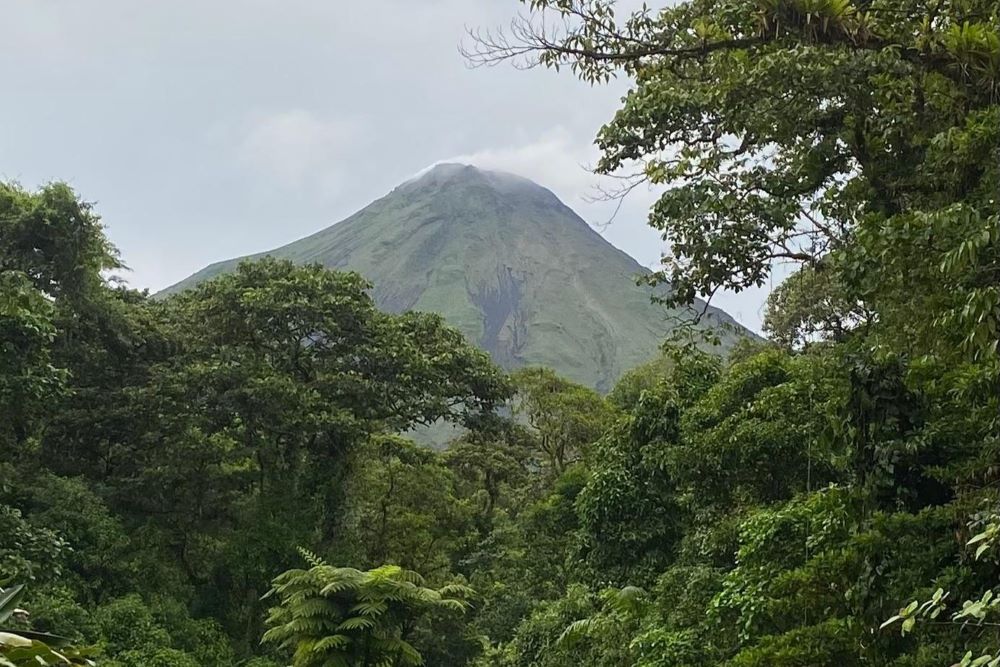
For decades, Costa Rica has demonstrated that economic development and forest conservation can go hand in hand. After experiencing high deforestation rates in the 20th century, the country has reversed this trend, doubling its forest cover and becoming a global example of sustainable land management.
A significant share of the finance from the LEAF Coalition is expected to build on Costa Rica’s long-standing Payment for Ecosystem Services (PES) programme, supporting landowners, Indigenous Peoples and local communities who play a key role in protecting forests. At the same time, the funding will contribute to a broader set of measures to strengthen forest conservation, biodiversity protection, and sustainable livelihoods across the country.
Scaling up forest finance through the LEAF Coalition
The LEAF Coalition brings together governments and companies to provide large-scale, results-based finance to tropical forest countries. Costa Rica’s achievement shows how high-integrity carbon markets—underpinned by strong public finance—can unlock private sector engagement and deliver real climate benefits while supporting people and nature.
A biodiversity powerhouse
Costa Rica is home to nearly 5% of the world’s biodiversity, despite covering just 0.03% of the Earth’s surface. Its forests host thousands of species and are critical for global climate stability. Protecting these ecosystems delivers benefits far beyond national borders.