
 Photo: Ahtziri Gonzalez/CIFOR
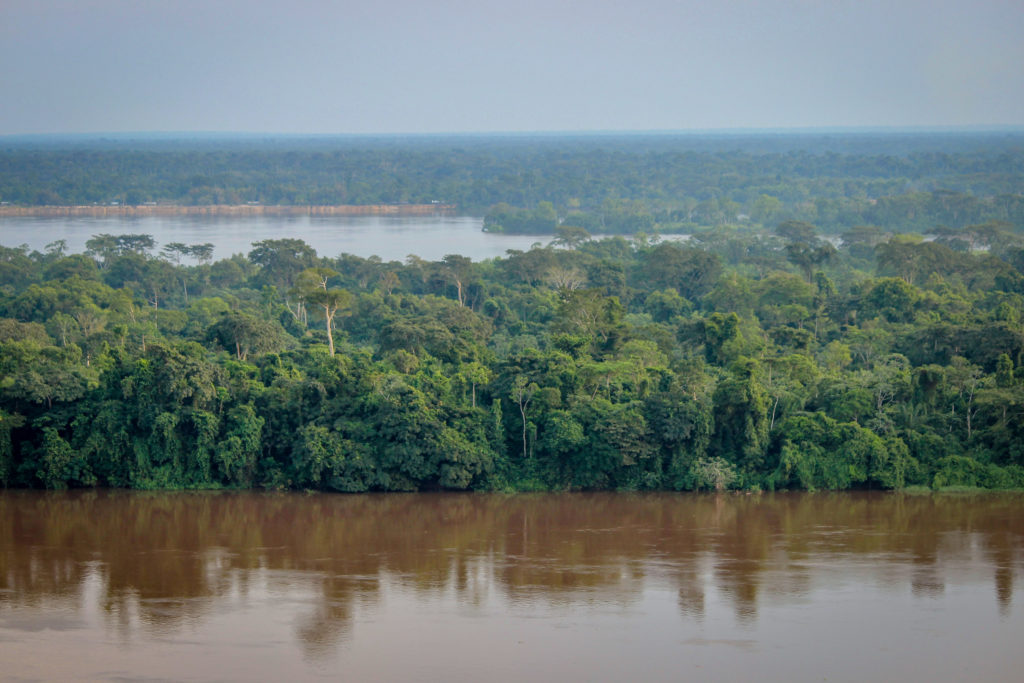
The Democratic Republic of Congo (DRC) is home to the second-largest tropical rainforest in the world. These forests play a critical role in stabilizing the global climate, providing rain to African agriculture, storing vast amounts of carbon, and sustaining extraordinary biodiversity. They also support the livelihoods of millions of people who depend on agriculture and natural resources to feed their families.
Yet protecting these forests while ensuring food security remains a major challenge. Many rural households rely on small-scale agriculture, and when fertile land becomes scarce, farming can gradually expand into forest areas. Identifying solutions that both strengthen rural livelihoods and reduce pressure on forests is therefore essential for the long-term protection of the Congo Basin.
In the Kongo Central province of the DRC, One Acre Fund is working with farmers and local authorities to address this challenge through the Project for the Supply of Agricultural Inputs and the Sedentarization of Smallholder Farming in Kongo-Central/Projet d’approvisionnement en intrants et sédentarisation de l’agriculture paysanne dans le Kongo-Central (PAPS). The program links agricultural development with forest protection by helping farmers improve productivity and livelihoods while encouraging cultivation on existing farmland rather than clearing new forest land. By improving yields and providing targeted support to rural households, the program helps shift agricultural expansion away from forests while strengthening local livelihoods.
In the first year of the three-year program, which began in June 2025, the initiative has already reached over 1589 smallholder farmers, providing them with training and ongoing support. Over the course of the program, more than 10,500 farmers will receive training on improved agricultural practices, including soil preparation, optimal planting densities, fertilizer use, and crop management throughout the growing season. Alongside agricultural support, the program also promotes agroforestry and landscape restoration through the establishment of local tree nurseries. To date, these nurseries have contributed to the production and distribution of more than 191,021 trees across participating communities, with the objective of getting to 7.3M trees by the end of the program. By integrating trees into their farms, farmers can diversify their production systems, improve soil health, and increase long-term resilience, while also contributing to the restoration of degraded landscapes.
These efforts are made possible through the support of the Central African Forest Initiative (CAFI) via the National REDD+ Fund of the DRC (FONAREDD), with funding from international partners including Norway’s International Climate and Forest Initiative (NICFI). By investing in programs that strengthen rural livelihoods while protecting forests, CAFI plays a crucial role in supporting sustainable development in the Congo Basin.
Although the initiative is still in its early stages, the foundations laid in 2025 represent an important step toward demonstrating that forest protection and agricultural development can go hand in hand. By supporting farmers to adopt more productive and sustainable farming systems we are reducing pressure on forest areas while improving food security and economic opportunities for rural families.
As the program expands in the coming years, it has the potential to demonstrate how targeted investments in smallholder agriculture can help protect one of the world’s most important forest ecosystems while building a more sustainable future for the communities who depend on it.