A new NOK 113 million contribution from Norway will help transform Global Forest Watch into Global Nature Watch, making nature data more accessible through artificial intelligence and strengthening support for action against deforestation and nature loss.
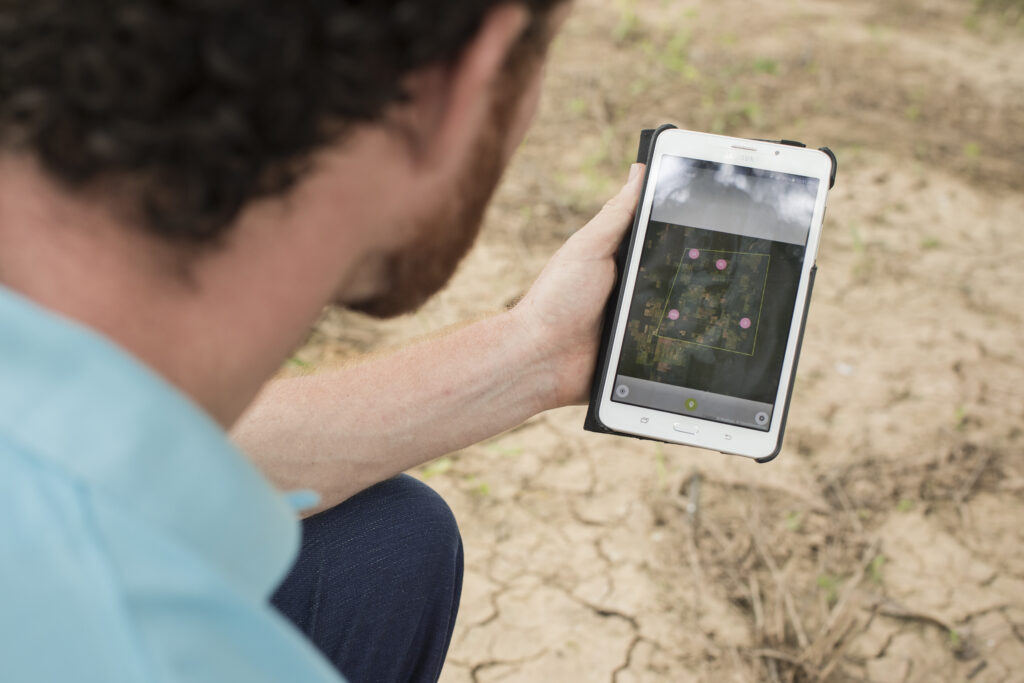 Photo: Jordi Ruiz Cirera
Action to reduce and stop deforestation depends on available and reliable data on where deforestation happens, when and why. Twelve years ago, Norway supported an ambitious idea: making satellite-based information about the world’s forests freely available to anyone, anywhere to stop deforestation. That idea became Global Forest Watch (GFW), the world’s first open, satellite-based platform for monitoring forest change globally. Global Forest Watch was a breakthrough for open access to forest data. It made deforestation significantly harder to hide and strengthened accountability by making independent information available to anyone.
As Norway, through Norway’s International Climate and Forest Initiative, announces a new contribution of NOK 113 million for the next phase of the partnership, GFW is evolving into Global Nature Watch (GNW), expanding beyond forests to include broader monitoring of ecosystems and land use. Artificial intelligence will allow users to easier get insights from complex environmental datasets. Instead of navigating multiple layers of maps, users will be able to ask questions in their own language, making the platform even more available.
A decade of impact
With Norwegian support, Global Forest Watch has been a game changer for open access to forest data and transparency regarding forest loss since its launch in 2014. It made information on forest change freely available to everyone, made illegal deforestation more difficult to hide, provided the world with an annual overview of forest loss, and enabled companies’ commitments to reduce deforestation to be independently monitored.
Today, GFW is used by governments, civil society, businesses, researchers and Indigenous Peoples to monitor forests and support informed decision-making. It underpins many of the global assessments and media reports that track forest loss and progress towards international forest and climate goals. The Forest Watcher mobile app, which allows users to monitor deforestation in the field without internet connection, has more than 75,000 users worldwide. Global Forest Watch data have been cited in more than 4,800 scientific publications, underscoring the platform’s scientific relevance. Consistent global data since 2014 is a key strength, as a global reference dataset which is an important complement to national forest monitoring systems.
More than 600 million hectares of forest, an area roughly equivalent to the size of the Amazon, are actively monitored by Global Forest Watch users.
The initiative has also strengthened local capacity for forest monitoring and protection. More than 100 organisations across 30 tropical forest countries have received support, while more than 6,000 people have been trained in using forest monitoring tools.
Evidence that monitoring can reduce forest loss
Norwegian support for Global Forest Watch has helped make satellite data, deforestation alerts and other monitoring tools available to Indigenous Peoples, enabling them to monitor their own territories. Through training and technical assistance, local communities have established their own monitoring systems, with Indigenous groups carrying out hundreds of field patrols to investigate alerts of potential deforestation.
A peer-reviewed scientific study found that 76 Indigenous communities in the Peruvian Amazon that received training and access to Global Forest Watch alerts reduced deforestation by 52% in the first year and by a further 21% in the second year compared with control areas.
Another study found that areas in Africa that received and actively used Global Forest Watch alerts experienced 18% lower deforestation rates. The impact was particularly pronounced in protected areas and in locations where government authorities had the capacity to respond to the alerts, highlighting the importance of combining timely information with effective enforcement and local action.
The platform has also contributed to concrete enforcement outcomes. Near-real-time alerts put evidence in the hands of rangers, prosecutors, community monitors and journalists. Global Forest Watch data have been used by prosecutors and law enforcement agencies in countries including Peru and the Democratic Republic of Congo.
The Forest Watcher App seen at a screen of one of the participants of the Forest Watcher App’s training and networking workshop. Photo: Global Nature Watch (GNW) / World Resources Institute (WRI).
Making nature intelligence accessible to more people
A decade ago, the challenge was limited access to forest information. The next phase of the partnership responds to a changing reality where not only access is key, but also to help more users without technical background to easily make sense of data from multiple sources and inform relevant action. Global Nature Watch aims to combine satellite data on forests and other terrestrial ecosystems data with artificial intelligence. Instead of requiring technical skills to interpret the information made available, the platform will allow users to ask questions in 170 languages and receive insights based on comprehensive data. By lowering barriers to access and understanding, Global Nature Watch has the potential to expand the use of environmental information far beyond traditional technical audiences to turn data into action more quickly and effectively. The satellite data presented identify and highlight different categories of areas of particular importance, including protected areas and Biodiversity Hotspots.
Supporting transparency and accountability
As tropical deforestation remains persistently high in many countries, independent and openly accessible forest data remains essential. Global Nature Watch will continue to provide globally consistent and transparent data as a public good, while helping users navigate an increasingly complex information landscape.
The initiative will continue supporting governments, civil society organisations, Indigenous Peoples and local communities, journalists, law enforcement agencies and private-sector actors in tropical forest countries. The objective is simple: to support that better data leads to better decisions and provide a basis for accountability and more effective action for forests and nature.
Norway’s new support will help ensure that updated knowledge about forests and other ecosystems remains freely available to the people and institutions working to halt and reverse forest and nature loss worldwide.