The approval of Ghana’s first ART-TREES-credits marks a major milestone in efforts to mobilise large-scale finance for forest protection and sustainable land use.
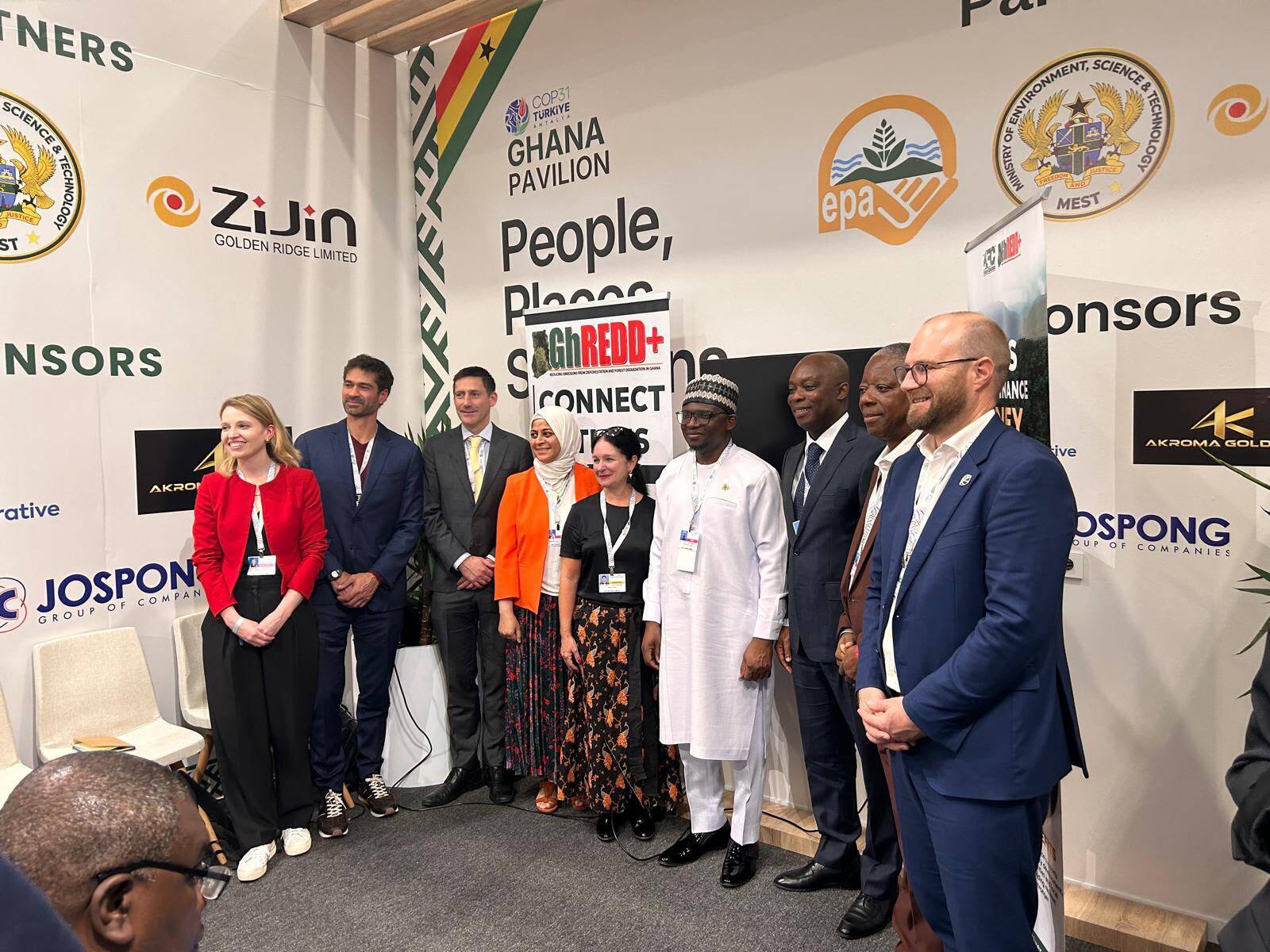
During COP31, it was announced that Ghana has secured approval of its first issuance of high-integrity forest carbon credits under the ART-TREES standard.
Ghana is one of the first countries in the world, and the first in Africa, to reach this milestone. The issuance recognises verified emission reductions from Ghana’s forest sector and opens the door to new sources of climate finance for forest protection and sustainable development.
Scaling up climate finance under LEAF
Ghana will become the second country after Costa Rica to sell ART-TREES credits to the LEAF coalition. The LEAF Coalition brings together governments and companies to provide large-scale, results-based finance for tropical forest countries.
Private buyers of Ghana’s carbon credits include Amazon, Bayer, PwC and Walmart Foundation. Norway and the United Kingdom will also take part in the transaction through results-based climate finance, without taking ownership of the carbon credits.
Commenting on the announcement at COP31, Sigrun Aasland, Minister for Climate and Environment of Norway, congratulated Ghana on the achievement:
“Congratulations to Ghana on this important achievement. Ghana’s success sends a strong signal that protecting forests benefits the climate, nature and local communities. Through the LEAF Coalition, we are demonstrating how countries that deliver results can unlock public and private finance at scale and support further efforts to protect forests.”
Building on years of REDD+ implementation
Ghana’s achievement is the result of more than a decade of investment in REDD+ readiness and implementation. Over this period, the country has built and implemented policies, institutions and monitoring systems needed to implement REDD+ at scale and generate verified emissions reductions.
Through its work in the cocoa-forest landscape, Ghana has developed a strong framework for measuring and verifying emissions reductions while promoting more sustainable land-use practices. The country became one of the first countries globally to receive results-based payments through the Forest Carbon Partnership Facility (FCPF).
Norway’s International Forest and Climate Initiative (NICFI) has been a long-standing supporter of Ghana’s REDD+ efforts and a major contributor to both the FCPF and the LEAF Coalition, as well as capacity building through UNREDD.
Building on the experience from FCPF, Ghana expanded its efforts to reduce emissions from deforestation and forest degradation under a jurisdictional ART-TREES programme covering approximately 2.5 million hectares of forest across 10 regions in southern and central Ghana. The programme focuses on the cocoa-forest landscape of Ghana’s High Forest Zone, where agricultural expansion, illegal logging, mining and wildfires are the key drivers of deforestation.
To address these challenges, Ghana has implemented a broad set of measures, including strengthened forest governance and law enforcement, sustainable agroforestry and community-based forest management, and restoration of degraded forest areas. A key element has been supporting cocoa farmers to plant and maintain shade trees, helping restore forest cover while improving productivity and livelihoods.
Under Ghana’s Benefit Sharing Plan, a large share of the proceeds will flow directly to farmers, communities and traditional authorities, alongside support for community development and continued implementation of forest and climate actions.
Ghana’s participation demonstrates how countries that invest in robust REDD+ systems can access new sources of climate finance while delivering benefits for forests, local livelihoods and the climate.